Sunday, May 1, 2011

Pointing Towards Heaven – St Michael’s Episcopal Church 3-26-11


Charleston, South Carolina

How grand it is to simple wander around our world looking for interesting things. In Charleston one does not have to wander at all; looking in any direction from most any point will bring into focus some grand treasure worth ‘collecting’ with a camera. So it was while roaming up and down Meeting Street, Charleston’s main artery. One can hardly miss St Michael’s Episcopal Church. The following descriptions are from historical notes on the church.

St. Michael’s Church is the oldest church edifice in the City of Charleston, standing on the site of the first Anglican Church built south of Virginia. In the 1680’s a small wooden church, the first in the new town of Charles Town, was built on this spot for the families of the Church of England, and named St. Philip’s. By 1727, the town had grown too large for the small church and a more spacious one was built of brick on Church Street, later destroyed by fire in 1835.

By 1751, St. Philip’s had again proved too small for the increasing population, and another church as authorized by the General Assembly of the Province, to be built on the old site and to be known as St. Michael’s. The cornerstone was laid in 1752 and in 1761 the church was opened for services. Except for the addition of the sacristy in 1883 on the southeast corner, the structure of the building has been little changed.

Although the architect’s name is unknown, the type of architecture follows the tradition of Sir Christopher Wren, generally used during our Colonial period and up to the Gothic revival in 1841. The design carries out worship according to the Book of Common Prayer, where the service is to be heard and all the worshippers are to participate. The altar is close to the congregation in a shallow recess, the apse, with the choir and organ in the rear. A gallery on three sides brings more people closer to the center of worship. St. Michael’s is one of the few city churches in America that has retained this original design.

In the main vestibule, a table on the west wall gives an historical outline of the church. To this may be added the tornado of 1938, which struck the building with such severity that services had to be held in the parish house for many months while repairs were being made. The steeple is 186 feet in height; the weather vane is 7½ feet long. The entire steeple sank eight inches as a result of the earthquake in 1886. The font was imported from England in 1771.

The large, long double-pew in the center of the church, No. 43, originally known as “The Governor’s Pew,” is the one in which President George Washington worshipped on Sunday afternoon, May 8, 1791. General Robert E. Lee also worshipped in the pew some seventy years later. The pews, of native cedar, are very much the same as they have always been except for the addition of ten, filling up what was once an aisle from the south door to a north door (now filled by the “Annunciation” window), thus originally making a cruciform design with the main (east-west) aisle.

The chandelier, ordered form London in 1803, now electrified, was first lighted with candles and later with gas.

The pulpit is the original one, remarkable for its height and the massive sounding board supported by two Corinthian columns. Its prominence bears out the fact that at the time the Church was built, the center of interest in the service was the sermon, conflicting with the central place planned for the altar. The panel with the ΙΗΣ was taken as war booty following the War Between the States and then later voluntarily returned and replaced. Although the present reading desk was given in 1892 as a memorial, it is in the location of the original desk, and together with the pulpit above it make sup what is called a “double decker”.

In 1865 during the Federal bombardment of the city, a shell burst near the chancel. A scar is still to be seen at the base of the pulpit.

The Altar is Victorian, having been presented in 1892 as a memorial. The chancel chairs were purchased by the Vestry in 1817. The chancel rail of wrought iron, dating from 1772, is a fine example of English hand work of the period. It was the first important piece of wrought iron to be imported to Charleston.

The present chancel decoration was executed by Tiffany in 1905. The design in the half-come was originally blue sky with gold stars and a golden sunburst. The ten small Corinthian columns also date form 1905. The chancel window, installed as a memorial in 1893, shows St. Michael’ casting out the dragon, after Raphael’s painting.

The two stained-glass windows in the north aisle, “Easter Morning” and “The Annunciation” were presented to the church in 1897 and 1908, respectively. The stained-glass door in the south side of the church dates from 1915. A long term restoration and preservation project for the stained glass of St. Michael’s has recently been completed as part of St. Michael’s 250th Anniversary celebration.

The original organ was made by John Snetzler in London; it was installed in 1768. The case, which was altered several times, was refinished and restored to its original configuration in 1994 by Kenneth Jones of Bray, Ireland. Jones built a new 40-stop, 51-rank tracker organ to fit in and behind the Snetzler case.

The clock and ring of eight bells were imported from England in 1764. The clock originally had only an hour hand for each face. In 1849, City Council asked permission to add a minute hand, which was granted. The Ainsworth-Thwaites clock was restored by Smith of Derby, London, England, in 1993. It is thought to be the oldest functioning colonial tower clock in the country.

Almost Heaven - Edisto Memorial Gardens 3-24-11


Orangeburg, South Carolina

I had the happy circumstance of getting in my car today and spending the whole of it wandering across the whole of South Carolina. My first happy distraction was to be found in Orangeburg, about 165 miles south east of home.

There is little to compare with a fine garden at the peak of Southern spring. Dogwood, cherry, magnolia, and wisteria compete with azalea, snapdragon, and dozens of other grand harbingers of spring. Wandering about hundreds of acres on a 76-degree day with gentle breezes will drive away anyone’s funk. Spanish moss on magnificent live oaks and cypress trees reminds one of the larger world that runs smoothly without any help on our part. Great cypress trees create a solemn majesty to the gardens. A half mile of board walk makes for a most pleasing mid-day walk in the cool shade of these ancient sentinels. Out in the sun nearly 5,000 roses are to be found in formally laid out gardens. These gardens are official test gardens for newly created hybrids.

In 1926 the Edisto Memorial Gardens were created to memorialize those who were lost in a number of conflicts. Tastefully understated memorials at the entrances to the garden accomplish this task nicely. A series of finely crafted bronze sculptures are sited near a small lake and one of the war memorials. Images of these are included in the linked photo library.

Dreams in the Sand 3-23-11


Sea Brook Island, South Carolina

Arriving at the beach at sunset for a three-day weekend is a bit like being let out of class for the long recess at lunch time. It’s especially grand after a snowy winter. Being on the sand alone at sunrise is even better. Mid-day presents all sorts of interesting things to be seen and appreciated. Midnight beaches under a full moon are a sterling wonder.

Every year I join a men’s retreat in February on Sea Brook Island for three days. The opportunities for meditation, contemplation, and ‘collecting’ beauty are endless. Even great herons are co-operative as photo subjects.

Adding spice to the whole experience was an abundance of finely prepared food, shared with friends new and old.

The Edge of Paradise 3-21-11


Hartwell, Georgia

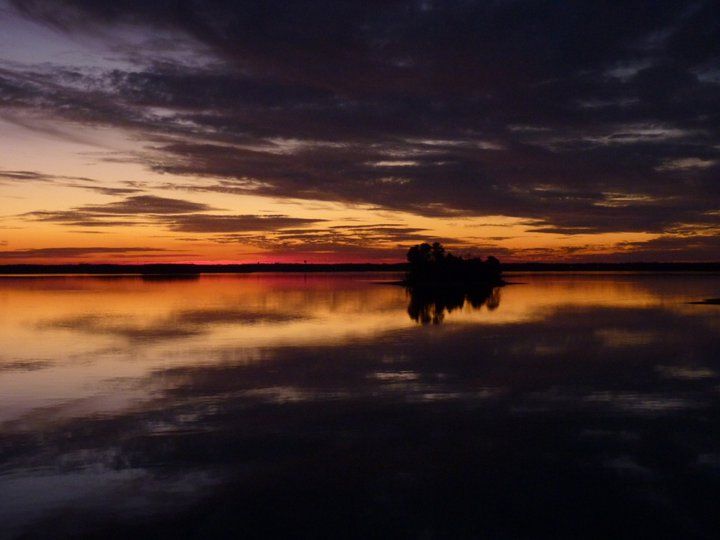
Driving home from work in Georgia I had the commute from heaven. Forty minutes of spectral detonations transformed the world. I had the great fortune of having a camera on the front seat. I stopped and used a guard rail on the dam as a tripod.

We have lots of expensive technology feeding us images of unending horror and mayhem. Every war and natural disaster is brought to us in high definition with surround sound. Take a break. A cheap camera and an attentive set of eyes will allow us to experience and abundance of beauty. Driving home from work can be a restorative mini-retreat that brings our soul to states of transcendence.

While crossing Hartwell Dam at last light the lake was as smooth as the Sargasso Sea and the luminous light was other worldly, perhaps a glimpse of heaven. Wish you had been there.

Thursday, February 24, 2011

A Place Set Apart - 2-23-11


Belmont, North Carolina

Six years ago I had the good fortune of visiting a convent near Pittsburgh on Black Friday. Stunning was the serenity and beauty to be found on a hundred acre oasis across from a frenetic and rather bleak shopping mall. A recent experience in North Carolina reminds me again of this happy memory. Quite taken with a church spire at sunset while passing on a nearby interstate, further exploration the following day revealed another oasis of import. The Belmont Abbey and College provide an aesthetically pleasing and gentle environment for contemplation, meditation, and undergraduate learning. Since the late 19th century, an order of Benedictine monks has offered a Christian undergraduate education, even monastic life to those men called to it.

A few hundred yards from an interstate off ramp, one finds an inviting campus entrance. An imposing basilica on the left gives a pleasing visual boundary, even a sense of reference and enclosure to the cozy college campus. The ornamented brick structure from the 19th century is surprisingly modern in its interior feel. This is compensated for by a fine set of traditional gothic stained glass windows filling the nave and transepts. At 9 AM the luminosity of the windows is uplifting, even inspiring.

A couple hours given to wandering the compact campus proved an excellent investment in our experience. A most gracious receptionist in the imposing terra cotta administration building told us of a newly built chapel on the other side of campus. Taking an hour to make a five-minute walk to the chapel, we found plenty of fine things worthy of photography. Beyond the province of our cameras was the gracious hospitality and friendliness we found in staff and students alike. It’s hard to conceive of the good fortune of those able to study and live in such a benevolent cozy community.

What we thought to be the chapel proved to be a student commons, interesting but certainly not sacred ecclesiastical space by any stretch. With helpful redirection, we did find the chapel behind a dormitory quad. This proved to be one of the most stunning buildings I’ve encountered in fifty countries.

Little more than twenty-five by thirty feet this cedar and glass structure is essentially perfect. Its natural materials are their own ornamentation. Its citing in deciduous forest allows bright sunlight in winter and cool shade in summer. The forest provides most of the interior decoration of the chapel. The quiet dignity of the building and its citing allow the edifice to fulfill its mission superbly, functioning as a 24/7 adoration chapel. Students and faculty are committed to offering intercessory prayers therein at all times.

I’ve seen several larger chapels of this type on university campuses, magnificent structures, yet feeling quite secular in nature, devoid of altars or Christian symbology; used primary as wedding chapels or music venues. The St Joseph Adoration Chapel nears architectural perfection in integration of design and function.

Walking in, intent on photographic its interior I was wrested from my role as a photographer to a compelling one as supplicant. The holy sensibility arrested my touristic ambitions and soon a reverent, nearly numinous affect came over me. Discretely, I did get a few interior images from the back of this wondrous space. I simply could not leave the place to the vicissitudes of memory alone. Leaving, I couldn’t but feel good about Generation X. With these young students and staff in faithful devotion to something larger and more benevolent than themselves, this generation will do just fine.

We made time to stop for a pleasing lunch in The Daily Grind. This student venue was surprisingly gentle in its energy and suffused with courtesy, even to us older tourists wandering through this intimate little world. The universe felt decidedly friendly to us today.

Thursday, February 10, 2011

A Legacy of Color and Place 2-10-11


Belmont, North Carolina

A compelling aphorism of ancient times states, “Plant a shade tree under which you will never sit.” The idea is truly generous gifts are those requiring significant effort on our part but from which we will never be a direct beneficiary. Those who underwrite the development of a botanical garden are such people in spades. Often they will never get to see how their visionary gifts will bloom in the lives of people yet unborn.

Daniel Stowe is a name completely unknown to me until I saw it recently on a brown Interstate tourism sign. A botanical garden named after him is down a country road some ten miles further on. Only today did I make the effort to actually get off the Interstate and make the ten-mile trek to see what was named after a man unknown to me. Having fourteen hours before needing to be at an airport twenty miles away, I was quite unhurried and unscheduled. Expecting a country road I was a bit surprised to find myself instead passing through an admixture of prosperous suburbs, once prosperous suburbs, non-descript commercial metastases, and eventually pleasing open country.

Finding a most agreeable entrance and a surprising well-manicured road leading through ponds and native gardens, I found myself arriving at a visitor’s center that could have been on the grounds of Peterhof in Russia or a large olive estate in Italy. How could this grand structure be out here in the North Carolina countryside? Who financed this and why isn’t anyone here? Quite taken with the building, I roamed around taking a series of photographs of the exterior before the sunlight gave way to forecast rain and drear. As it was, I had about thirty minutes of bright morning sun to capture the essence of this fine visitor’s center and the surrounding gardens with their fine gates, trellises, and promenades.

Seeing only a couple of gardeners working, I never saw anyone else, save one woman alone who spoke minimal English and wanting only minimal conversation. I again wonder how it is I find myself alone in a world class treasure. I’m reminded of the time not so long ago when I was alone in the epic Frederiks Kirke in Copenhagen while the organist rehearsed, listening to sublime melodies under the third largest rotunda dome in the world. There’s much to be said for this kind of solitude. It is enriching beyond words.

With the sudden loss of sunlight and the absence of color in early February, it became a bit of a game to catalog the textures of the surprisingly diverse evergreens placed in a labyrinthine series of garden ‘rooms.’ Extensive ponds, fountains, and walks added interesting compositional elements to my images. After ninety minutes of ‘collecting’ this intriguing place I wandered back to the visitor’s center, figuring it would have an interesting interior. I was bowled over to find its central ceiling contains a vast dome of stained glass, reminiscent of the great stained glass once housed in the Baltic Exchange in London before terrorists blew it up in 1991. The present dome was salvaged from a large Baptist church no longer wanting it. Huh? I did not begrudge at all making a donation to this amazing garden. I did learn, after all, that Daniel Stowe gave four hundred acres and $14 million to establish these gardens a little over ten years ago. What was my $12? Employees present in the visitor’s center were hanging a photo show and invited me to bring a camera tripod inside and have a go at it.

“Inside’ proves to be an 8,000 square foot orchid house with an impossible collection of orchids and bromeliads, all in vibrant bloom. The house reminds me of the great Victorian glass houses to be found in European cities. This new orchid house is presently venue to a two-month color burst special event. The clouded-over sky provided perfect light to ‘collect’ hundreds of images of these wonders of horticulture, all finely displayed in the context of waterfalls, pools, and terraces.

I’m reminded I need to always pay attention to those brown highway signs. Some of them lead to paradise. And sometimes the staff of paradise will offer you a plate to join them for a grand luncheon in a great hall with a grand piano played nearby. I have Daniel Stowe to thank for his vision which showed me what paradise can look like, even in the middle of winter.

Sunday, November 8, 2009


Riding on the East Wind
Heaven, somewhere above South Carolina


As a kid there were those moments when heady anticipation was almost overwhelming. I recall those Fridays that were the last ones of the school year- the vast infinity of summer vacation lying before us. During summer there were those magic times when we got to go to Wagner’s pool and swim all afternoon - forgetting the endemic chaos of an alcoholic family. At other times we could actually build our palaces in the sky in the large elm trees in the back corner. Of course, the anticipation of Christmas made time stand still in the days leading up to it.

As an adult, perhaps one of the most powerful moments of anticipation derives from the feeling that happens when the crew lets go of the basket and the giant gumdrop above us successfully defies gravity. One is actually able to soar into the sky and watch the world spread out below. Hot air ballooning is the only mode of transportation where the journey itself is absolutely everything. And so it was today. After spending the morning chasing thirty hot air balloons with my cameras in my old earth-bound Toyota, it occurred to me that being up in the cerulean skies of a second Indian summer made a lot more sense than chasing balloons with thousands of other people doing the exact same thing, or raking leaves in the back yard.

After making a phone call to the festival organizers and then showing up at the launch field in mid afternoon I was able to secure a place in one of the thirty balloons that would be participating in a mass ascension at sunset. For the next two hours on a warm Saturday afternoon, I played the part of a gawking tourist and wandered around the launch field with my cameras, ‘collecting’ balloons and people in various states of euphoria and delight. Secretly, I knew I was in a privileged tiny group that was going to experience this balloon festival to the max. Around 4 PM the giant gumdrops starting plucking off the surface of a gravity-controlled world and immediately caught winds to the east. The idea that I was about to get caught in these easterly winds in one of these was delicious beyond words. Hurry up!! I want to go!

Finally our turn came to assemble the basket, struts, burners, telemetry wires, lay out the envelope, attaching the shrouds, and begin the cold inflation. Something that sounds like a small aircraft engine powers a truncated wood propeller and cold air is used to inflate the 77,000 cubic foot envelope, bringing it to life. At the right time heat is applied with the propane burners and the balloon stood up. At the proper moment the pilot says, “Hop in”. He didn’t have to ask me twice.

Tugging at the ropes tying us to the planet, the rainbow cloud above me wanted to get off this world as much as I did. The crew turned us loose, and instantly we were caught in those easterly winds. Suddenly we were in total stillness and we experienced heavenly peace in stunning fashion. This was so much better than catching the perfect wave or even getting the perfect reach in a sail boat. The launch field spread out below and soon people looked like ants scurrying about looking for candy. Shortly the horizon opened up and the city lay before us. It’s utterly entrancing to waft across town, hanging from the bottom side of a huge gumdrop, having everyone stopping their activities on earth to wave at us and smile. Something about hot air balloons provokes this happy involuntary reflex of waving and grinning with great energy.

At certain times of day on certain select days, light allows us wanna-be photographers to look like true professionals. The aureate cast to the slanting late-afternoon sun around us brings the fall colors below to vibrant life and these clouds of balloons are glorious in their brilliant sun-drenched finery. I have now taken several hundred images of this magical world up here. I could stay up here forever. I find myself scurrying around the different sides of the basket to capture every aspect of this cerulean world. Wisps of high cirrus clouds give a fine grain texture to the heavenly realm yet further up from us. There is a magnificent transcendent sensibility to be in a high place, not unlike that which draws mountain climbers to make long dangerous ascents to the summits of great peaks.

Up here I see how splendid our world really is, the grand clouds of tree canopies, now a grand admixture of cadmium orange, gold, alizarin red, yellow, burnt sienna, burn umber, crimson, and scarlet spread out below, creating a sense of softness and security. How different those millions of leaves look from up here than when I am raking them into great piles.

The necklace of large lakes here known as ‘the freshwater coast’, glint below and create a sense of being in a pristine land of a thousand lakes. The world seems fresh and well delivered from the drought that lasted here for so many years. Many are enjoying their powerboats on water that was but weedy fields not so long ago, leaving contrails of white foam in their wake. Sailors, like us, use the wind, to experience the joy of the journey.

I’m not sure I want to descend; the ride on the eastern wind is way cooler than summer vacation, even better than getting the perfect wave on a board at Newport Beach. Up here all really seems well with the world. Perhaps it really is, if we but pay attention. If Earth is this good, what is Heaven going to be like?

“Eyes have not seen, ears have not heard, the hearts of men have not even imagined the things I have prepared for you.”